Suicide
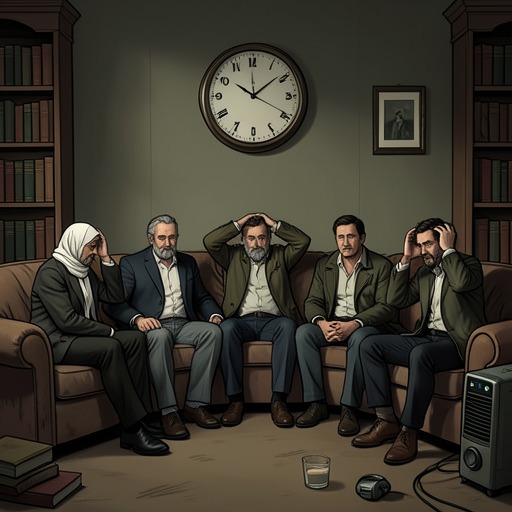
All My Puny SorrowsSuicide is a recurring family history and a difficult ethical question in All My Puny Sorrows, not a single event with a simple explanation. The deaths of Jake Von Riesen and Leni, Elfrieda’s repeated attempts to die, and Yoli’s consideration of helping her sister all return the family to the same questions: what it means to live with unbearable distress, what relatives can decide for one another, and how inherited grief reshapes the present. The novel traces those questions through repetition, argument, and practical decisions rather than offering a final rule.
Family History and Repetition
Suicide has already altered the family before Elfrieda’s crisis becomes the center of the narrative. Leni, Tina’s daughter and Yoli’s cousin, died by suicide seven years before the account of Elfrieda’s latest attempt; Jake also died by suicide, three years before Leni. When Yoli travels to Winnipeg after learning that Elfrieda has again tried to die, she and Tina sit together in the car while Lottie drives. Yoli understands the moment as a return to something the family has endured before: the present crisis carries earlier losses into it, rather than standing apart from them.
That repetition is not presented as a tidy chain of causes. Yoli instead tries to locate the inherited pain in the family’s history, including the violence and fear experienced by earlier generations who fled Russia and hid during persecution. She sees how Mennonite religious condemnation and shame can deepen suffering, especially when people are made to feel sinful or evil for their distress. Her reflections connect private grief to the community’s treatment of mental illness, without suggesting that history alone explains anyone’s death.
Elfrieda’s Crises and the Limits of Intervention
Elfrieda’s wish to die recurs across the book, including a crisis before a concert in which she is found alive and taken back to hospital. Her condition requires intensive care. The event draws Lottie and Tina into the emergency, brings Yoli back to her family, and leaves those who love Elfrieda facing the limits of what they can prevent. The family’s closeness is visible in the journey to the hospital and in their efforts to remain beside her, but care cannot give them certainty about what she will choose next.
Yoli initially refuses Elfrieda’s request to take her to Switzerland. That refusal does not settle the question. As the crisis continues, Yoli wonders whether insisting that her sister must live is an expression of love or an attempt to impose a rule she herself cannot defend. She also considers her own vulnerability: she has lost her father to suicide and admits that she too sometimes sees suicide as an apparently rational answer to life’s distress, though she pulls back from that conclusion. The parallel makes her dilemma more than an abstract debate. She is trying to respond to her sister while carrying her own grief and uncertainty.
Assisted Death, Law, and Responsibility
Yoli’s search for options shifts the family’s argument toward assisted death. She researches Swiss law and learns, according to her understanding of the information she finds, that a person need not be Swiss and that assistance may be legal in cases of mental illness or weariness of life. She weighs the possibility of a clinic in Zurich against the prospect that doctors might not consider Elfrieda’s suffering sufficient. The legal information offers a possible route, not a guarantee or an answer to the moral question.
The practical details sharpen Yoli’s conflict. She considers whether Nic and Lottie would agree, whether Elfrieda might travel alone, and whether telling her about possible plans would extinguish any remaining desire to live. She also calls a lawyer to ask whether helping her sister die could expose her to a murder charge, then calls again to clarify that she is asking about legal consequences rather than announcing an intention to kill her. These deliberations show how family love becomes entangled with law, consent, and fear of responsibility. Julie, too, questions whether a Swiss clinic is meant for someone who is not already dying; Yoli counters that the law, as she has read it, includes mental suffering. Their uncertainty remains audible even as Yoli researches further.
Death, Aftermath, and the Work of Memory
The family’s experience of suicide exists beside other kinds of death. Tina’s heart surgery appears to be going well, but her organs fail afterward and she dies despite the efforts of medical staff. Her death is not suicide, and the contrast underscores the different ways loss can arrive: some deaths follow a person’s effort to end life, while others come unexpectedly despite treatment. At Tina’s funeral, relatives take turns telling stories in a Mennonite tradition. A toddler opens her urn and scatters ashes while the adults continue speaking about her. The moment joins disruption to remembrance: the story of a life does not stop when death makes its ceremonies difficult or imperfect.
After Elfrieda dies, the question of what to do with her remains becomes part of the family’s grief. Yoli wants to keep some ashes in Toronto, but Nic opposes dividing them; Elfrieda’s ashes are buried beneath a large tree at Elmwood Cemetery in Winnipeg. Lottie had suggested burial with Jake at East Village, but Nic says Elfrieda had expressly rejected that place. Yoli continues to imagine the alternative she could not arrange: that Elfrieda might have died peacefully and not alone in Zurich. She feels she failed, while Nic tells her that she did everything she could. The disagreement between those statements is not resolved by the burial. It shows how responsibility can persist as a question even after the choices themselves are no longer available.
Narrative Significance
The novel makes repetition a form through which trauma returns. A childhood memory of Elfrieda teasing Jake about setting the table comes back to Yoli when she sees her sister’s body, linking ordinary family life to the later fact of loss without making the memory explain it. The return of earlier deaths, remembered phrases, and familiar family roles gives the narrative its sense of recurrence: each new crisis is lived in the shadow of what came before.
Suicide also unsettles easy distinctions between compassion and coercion, faith and shame, or survival and suffering. Yoli’s refusal, later reconsideration, legal research, and eventual regret do not yield a formula that could govern every family. Instead, the novel keeps attention on the people left to act under uncertainty: the sister who asks, the sister who must answer, and the relatives who try to care for both. Its account of suicide is therefore also an account of witnessing—of telling what happened, carrying memories forward, and continuing to speak when certainty is impossible.